Why Aging Matters: The Difference Between Aged Basmati Rice and New-Crop Grains?
10 August, 2026
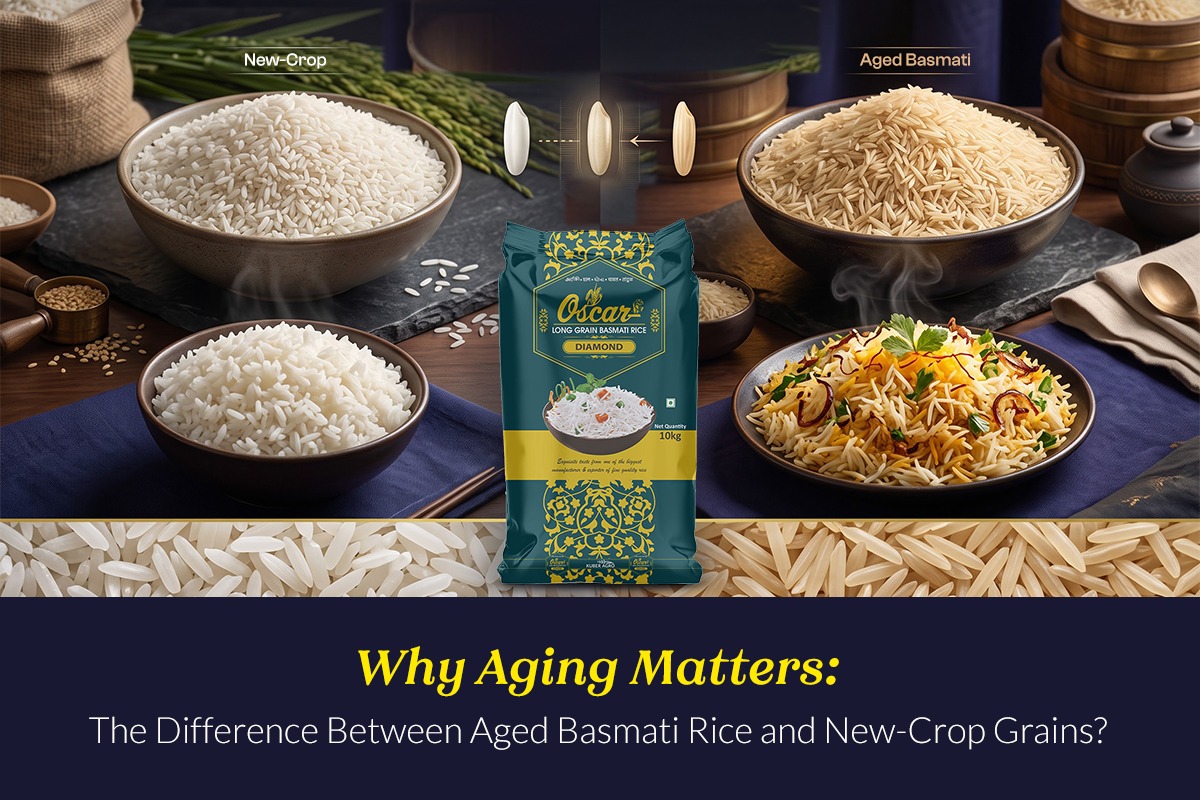
Every one of us loves the fragrance of a fresh preparation of biryani, but what if some of the rice dishes come out fluffy and others end up clumpy and sticky? It’s all about a process known as aging. Kuber Agro, the proud parent company of Oscar Basmati Rice, understands the transformation of a regular grain into a very unique Aged Basmati Rice product as we witness the process of time firsthand.
You’ll learn about how the aging process impacts the quality of rice and why this is crucial in the kitchen when you read this blog, along with how our Oscar Diamond basmati rice that is matured compares with the bland new crop varieties available.
What does “aging” mean?
“Aging” is not just a marketing term! In fact, aging is a necessary part of creating high-quality rice. Aging consists of moisture leaving the grain through time (over several months or even years), and when this occurs, the level of moisture decreases, while the quantity and structure of the starch in the aged basmati rice increase as a result of the loss of moisture.
In fact, studies have also shown that high-quality aged basmati rice can be cooked to an average of more than 2.5 times their original length after cooking. As a result of this increased length, you will find that the grains remain separate, fragrant, and light on your plate after cooking.
In new-crop rice, there’s a lot of moisture in the grain, which gives off too much starch during cooking, causing the grains to stick together. Aged Basmati Rice is meticulously aged, and your rice will stay perfectly separate and non-sticky.
2. The improved aroma and flavor
The aging process of basmati gives its aroma and flavor a more enhanced way to smell better and produce a much more flavorful product than that of fresh potatoes. This is because the longer basmati is aged, the more 2-acetyl-1-pyrroline is created. As this develops, it gives a very nice nutty/floral odor and very distinct flavor that cannot be found in fresh rice.
3. Better Yield and Value
The grains have expanded more in the cooking process as they are older and absorb more water. This means you will be getting a bigger amount of cooked grain per cup than the raw amount.
The Smart Buyer’s Quick Guide: Quality Checklist
Appearance: For a slightly golden or cream color, as opposed to a bright, chalky white.
Texture: Grains should be hard and totally dry to the touch.
Aroma: Smells nice, warm, and earthy without cooking.
Grain shape: Long, narrow grains with a sharp, pointed end.
Side-by-Side Comparison
Rice Type
Best For
Cooking Risk
Aged Basmati
Biryanis, Pulaos, and Gourmet Dishes
Requires slightly more water
New-Crop Grains
Porridges, Kheer, and Rice Cakes
Easily becomes mushy or sticky
Expert Tip: If you can rub a few of the raw rice grains between your palms and find that they are soft, then your rice is not aged. New-crop rice leaves a white powdery film on the skin, while well-aged premium basmati rice leaves the hands clean.
It’s all about the quality grain. When you opt for naturally aged basmati rice grains instead of fresh, high-moisture ones, you’re guaranteed a successful meal. Looking to up your dinner game? For all of your Basmati rice needs, visit Kuber Agro to experience the complete flavor difference between Basmati rices.
Author Name
Lorem Ipsum is simply dummy text of the printing and typesetting industry. Lorem Ipsum has been the industry's standard dummy text ever since the 1500s, when an unknown printer took a galley of type and scrambled it to make a type specimen book. It has survived not only five centuries
The macronutrients are basically the same, but the complex starches can change during the storage of the rice, and so aged basmati rice is often easier to digest.
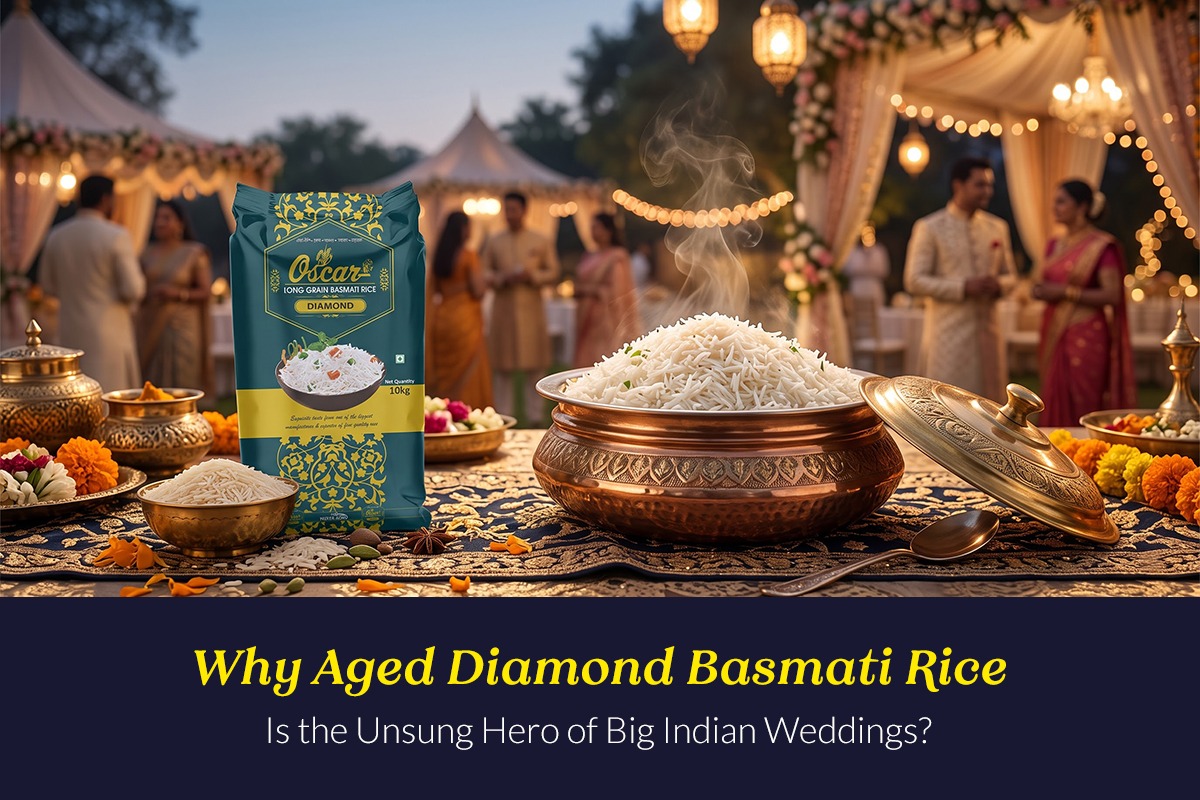
Organizing a big Indian wedding means dealing with countless issues, but one topic that is always at the forefront is food. While it is commonly accepted that the main highlight...
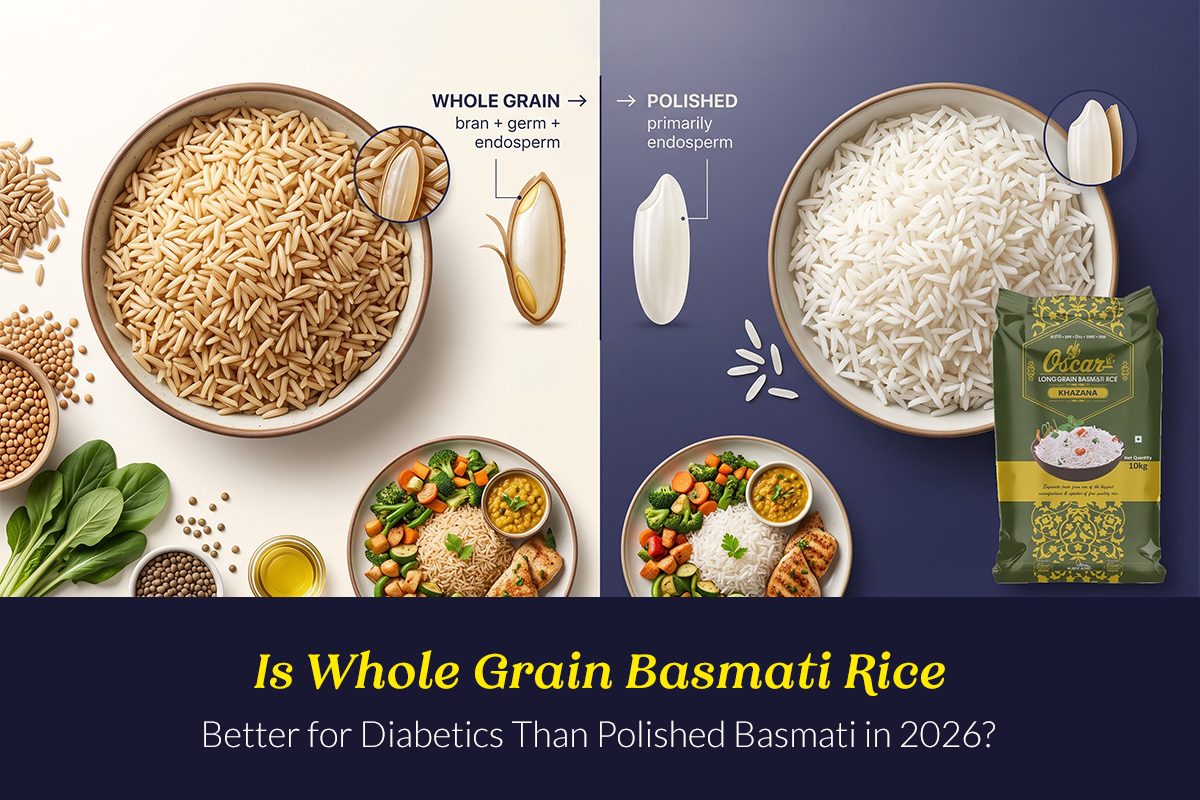
In the case of diabetes management, many people wonder whether their staple, everyday Indian cuisine must be completely avoided, and doing so comes as a big challenge. Several people keep...
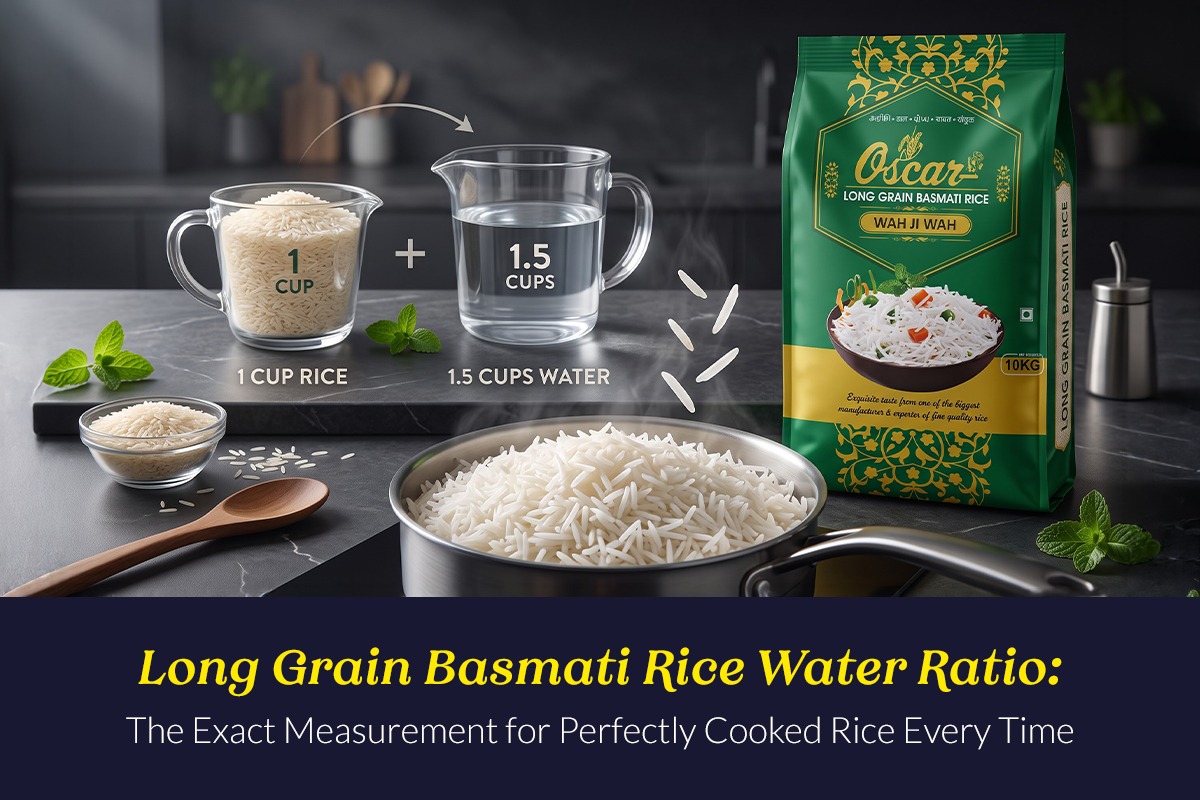
It is no fun serving your meal with sticky mushy rice when the goal is to have light, fluffy rice that does not clump. Knowing the long grain basmati rice...
When it comes to choosing rice grains to decorate your dining table, the options available can be a little daunting, and because of this, we receive inquiries about what sets...
In India, food is not just fuel for the body. It is a way to express love, heritage and celebration. That is why Indian celebrations always include long grain basmati...