Long Grain Basmati Rice Water Ratio: The Exact Measurement for Perfectly Cooked Rice Every Time
25 September, 2026
It is no fun serving your meal with sticky mushy rice when the goal is to have light, fluffy rice that does not clump. Knowing the long grain basmati rice water ratio is the most important fact that will help you achieve restaurant-quality results.
In Oscar Basmati Rice we have been working for decades on developing the art of the best basmati rice. We will give you recommendations on the rice and water proportions, cooking methods, and great tips that will help you never find their rice ruined again.
Understanding the Long Grain Basmati Rice Water Ratio
What makes Basmati rice special is that, unlike short-grain rice that sticks together because of high starch content, high quality long grain Basmati rice can double in length when cooked properly.
It is vital to stick to the proper water ratio when preparing rice, because unlike other long-grain rice types, basmati rice absorbs water very slowly. According to the research, more than 60% of home cooks fail to cook long-grain rice — not because of improper heating, but due to using an excessive amount of water.
Step-by-Step Instruction Manual for Perfect Long Grain Basmati Rice Preparation
Step 1: Rinse When Water Is Crystal Clear
Wash rice using cold water at least 3 to 4 times so that all the extra starch is washed away from the grain and won’t stick together while being cooked.
Step 2: Soak for 30 Minutes
Soaking allows rice to soak up enough water before reaching the boiling point and, in this way, gets rid of breakage.
Step 3: Use the Correct Ratio of Water to Rice
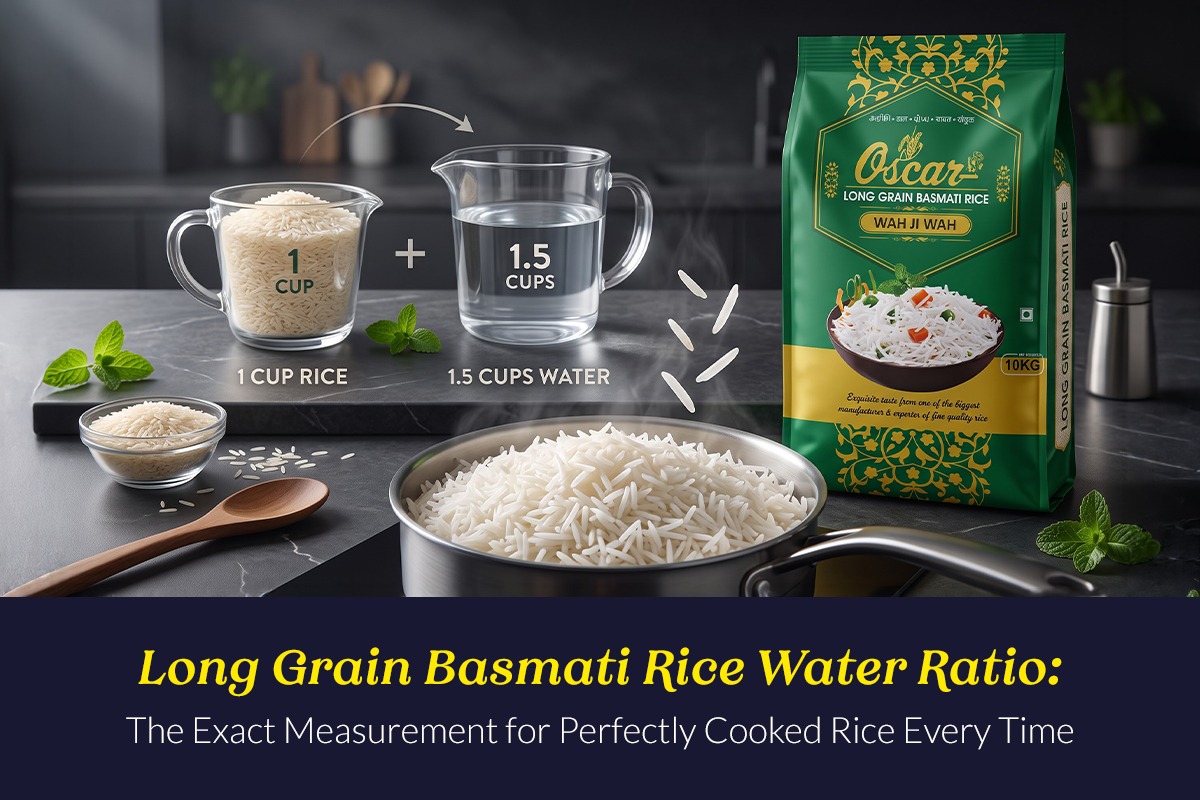
For the case of cooking basmati rice on the stovetop, mix one part of dry long grain basmati rice with one and a half parts of cold water. Close it with a lid and let it boil for 10-12 minutes on minimum heat.
The Ultimate Plan for Cooking High Quality Long Grain Basmati Rice
First of all, you should measure the amount of rice and water according to how much of both you are going to use.
Then, rinse them well in the water until it becomes perfectly clean.
Also, it is necessary to soak rice in the water for about 20-30 minutes and drain it after that.
Finally, let the pot stay covered for about 10 minutes without heating.
Fluff the finished rice before serving it to your family.
Cooking Methods Comparison
Cooking Method
Water Ratio (per 1 cup rice)
Best For
Risk
Stovetop (Strain Method)
6 cups (Excess water)
Extra long, separate grains
Losing subtle natural aromas
Stovetop (Absorption)
1.5 cups water
Daily meals & maximum aroma
Burning bottom if heat is too high
Electric Rice Cooker
1.25 to 1.5 cups water
Hands-off consistency
Soft texture if left on “warm” too long
Professional Tip: High Quality Long Grain basmati rice naturally dries up over the years, thus boosting its fragrance and making it water-absorbent without clumping together. It is important to look for special certifications associated with aged basmati rice, like our Oscar Extra Long Basmati Rice, which guarantees the longest grain size.
Related Products & Guides
Discover more varieties of different types of rice on the Kuber Agro Products page.
To get the best ratio of water to long grain basmati rice, you will have to stick to 1.5 cups of water for every 1 cup of rice and rinse and soak the rice before cooking. By allowing the rice enough room to expand, you will end up with really fluffy and aromatic rice every single time.
Are you ready to make your dinner experience nothing less than memorable? Visit Kuber Agro’s exclusive Oscar Basmati Rice offerings and discover the quality of Basmati rice!
Author Name
Lorem Ipsum is simply dummy text of the printing and typesetting industry. Lorem Ipsum has been the industry's standard dummy text ever since the 1500s, when an unknown printer took a galley of type and scrambled it to make a type specimen book. It has survived not only five centuries
When cooking long grain basmati rice in an open pot with more water than needed, a strict water-to-rice ratio does not apply. Simply add about 5–6 cups of water for each 1 cup of rice, boil it until it is almost ready, and then drain the excess water.
If you find your rice hard, it is likely that you did not soak it prior or that your lid did not allow moisture buildup. Leave it resting covered and off the flame for an additional 10 minutes so that the remaining steam is trapped.
No! Using the instant pot requires that no moisture escapes; thus, you will have to use less water, ideally 1:1 or 1:1.25 cups of water for 1 cup of soaked rice.
In the case of diabetes management, many people wonder whether their staple, everyday Indian cuisine must be completely avoided, and doing so comes as a big challenge. Several people keep...
When it comes to choosing rice grains to decorate your dining table, the options available can be a little daunting, and because of this, we receive inquiries about what sets...
In India, food is not just fuel for the body. It is a way to express love, heritage and celebration. That is why Indian celebrations always include long grain basmati...
Once in our lives, we have all gone through the time when we have dedicated all our hearts and hours making biryani at home, thinking it would taste like restaurant...
With the number of different packages to choose from in a grocery store, it can be rather difficult to ensure that you always choose the Oscar Daily basmati rice, especially...