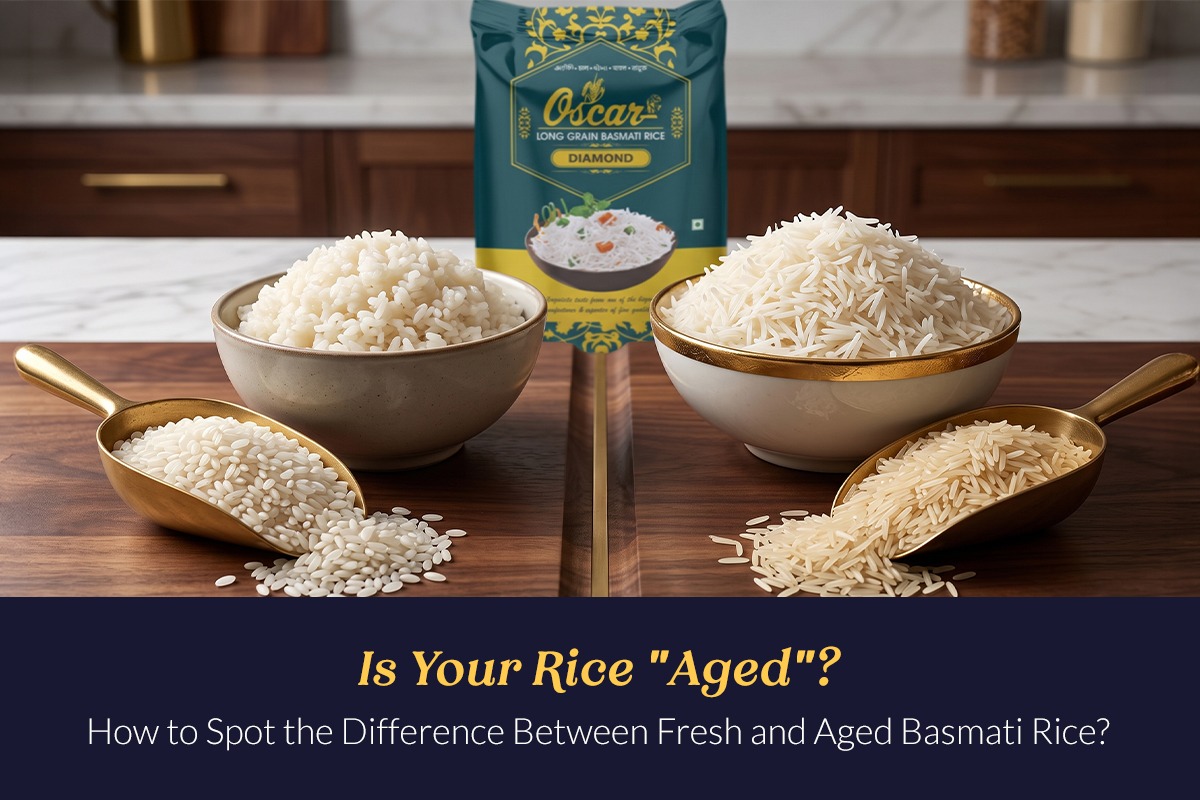
Is Your Rice “Aged”? How to Spot the Difference Between Fresh and Aged Basmati Rice?
26 June, 2026
You aren’t the only one who has cooked a pot of Basmati rice and ended up with sticky and clumpy rice. Many would-be home chefs don’t know that the key to the perfect fluffy, separate grains isn’t how it’s cooked but how long it’s been aged.
At Kuber Agro, the proud parent company of Oscar Basmati Rice, we know that true premium Basmati requires time to mature. This blog will teach you how to tell the difference between fresh and aged basmati rice so you can learn to perfect your next dish!
Why Does Basmati Rice Aging Matters?
Aging is not some marketing term but a traditional process that produces a significant change in the quality of the grain. As Basmati rice ages, it dries out, its distinctive aroma is concentrated, and the starch structure becomes harder.
Culinary experts say that the right aged basmati rice can grow up to 2.5 times its original length when it is cooked, but fresh or new rice will crumble and get mushy. If you are looking for that signature restaurant feel, then there is no other way around aging.
1. Check the color and clarity
Old aged basmati rice does not appear quite as white or somewhat translucent; it now exhibits an appealing creamy color (yellowish cream). After cooked (i.e. replaced with butter or oil) aged basmati rice will lack moisture as opposed to its fresh counterpart that has a short lifespan
2. Take a Sniff Test
Fresh basmati has a very light raw grain aroma. The natural aging makes aged basmati rice truly aroma-rich, having a strong, sweet, nutty scent even before it comes into contact with hot water.
3. Examine the Grain’s Texture
Press a grain between the fingers of your hands. Rice with higher moisture levels is very soft (can easily break) while older aged grains are usually very dry, brittle, (hard to break).
Ultimate Basmati Selection Toolkit – The Ultimate Quality Assessment Guide
Color Assessment – The majority of the grains will be a slight creamy/golden color versus being bright white.
Aromatherapy Assessment – When smelled from raw grains, the grains will produce a pleasant and complex odor.
Shape Assessment – The tips should be intact and not cracked or damaged (straight without kinked/twisted).
Moisture Assessment – Grains should feel dry to the touch and should have no stickiness.
Fresh vs. Aged Basmati Comparison
Rice Type
Best For
Cooking Risk
Fresh Basmati
Rice puddings, kheer, porridge
Becomes mushy, sticky, and clumps together easily
Aged Basmati
Biryani, pulao, fried rice, premium side dishes
Can require slightly more cooking water due to dryness
TIP: Check for rice that is at least 12 to 24 months old. We age our top-notch premium Basmati rice varieties to guarantee maximum elongation, fluffy texture, and the characteristic aroma every time you cook them.
It is possible to visually identify fresh vs.aged basmati rice by comparing the color, testing the hardness, and smelling the different types. Selecting only authentically aged basmati rice grains will dramatically improve the results of your cooking.
If you want to achieve restaurant-quality fluffiness on your dinner table tonight, give yourself the opportunity to experience the difference with our selected premiumOscar Basmati rice.
Author Name
Lorem Ipsum is simply dummy text of the printing and typesetting industry. Lorem Ipsum has been the industry's standard dummy text ever since the 1500s, when an unknown printer took a galley of type and scrambled it to make a type specimen book. It has survived not only five centuries
In general, true premium Basmati rice will have been aged for 12-24 months, which will provide an optimum moisture level and the best cooking result of separate fluffy grains.
No, raw aged rice has an exceptionally long shelf life when stored under proper conditions (i.e., cool and dry). Drying will also preserve its premium quality.
The reason for fresh rice becoming sticky when cooked is simply that the majority of harvested rice contains a high percentage of natural moisture (water) and active starch (glucose starch). During the cooking process, as the active starches dissolve in the water, they will create adhesion and build up starch in a sticky mass between grains of rice.
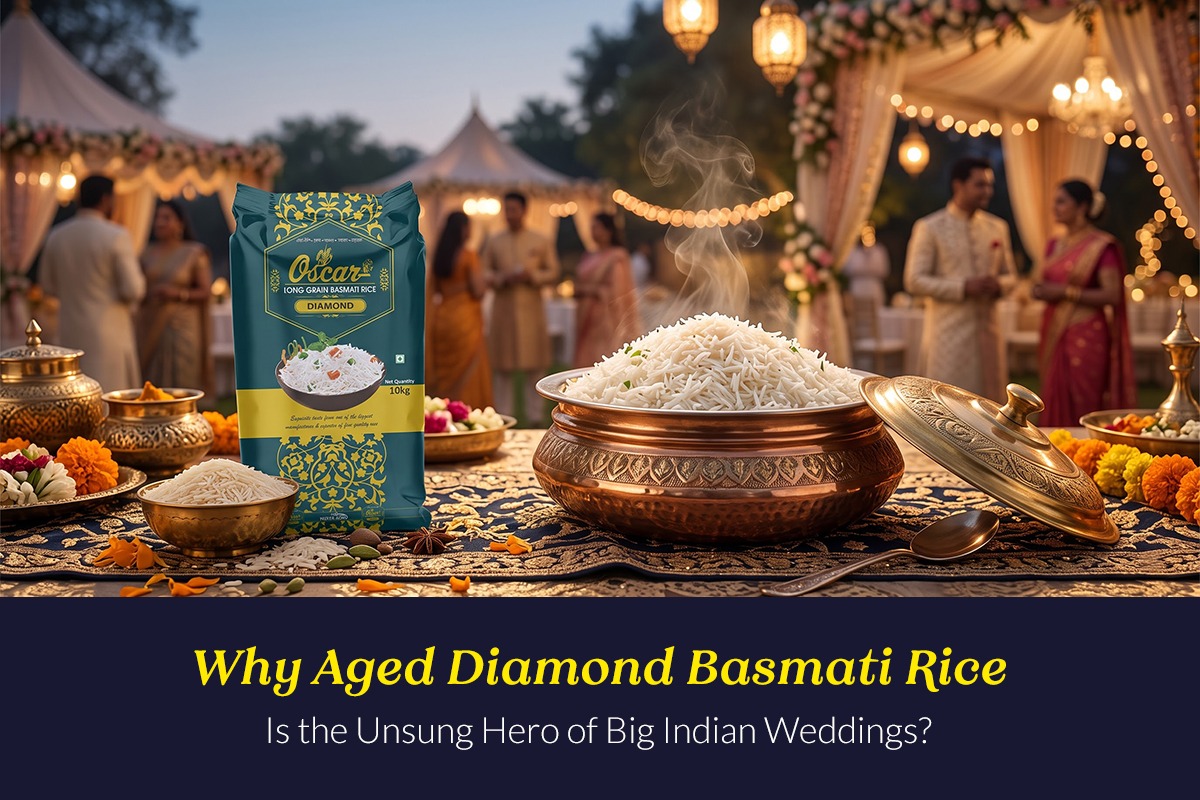
Organizing a big Indian wedding means dealing with countless issues, but one topic that is always at the forefront is food. While it is commonly accepted that the main highlight...
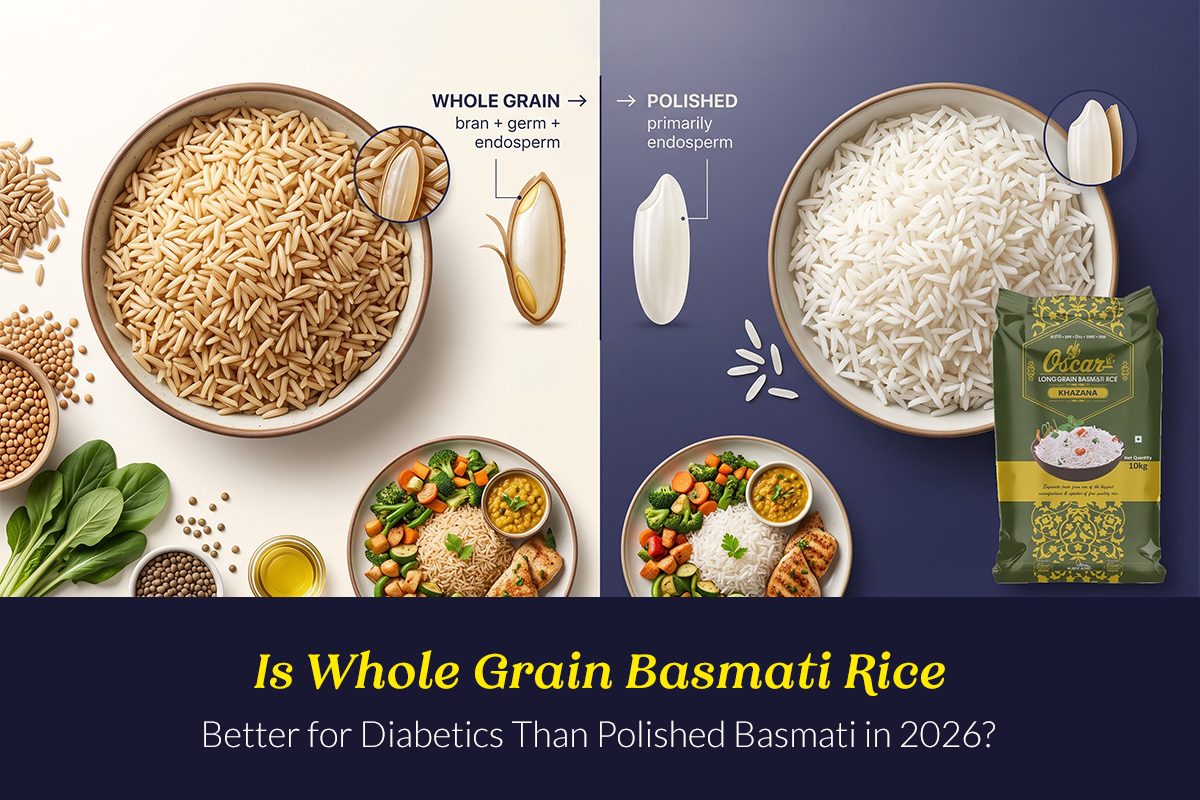
In the case of diabetes management, many people wonder whether their staple, everyday Indian cuisine must be completely avoided, and doing so comes as a big challenge. Several people keep...
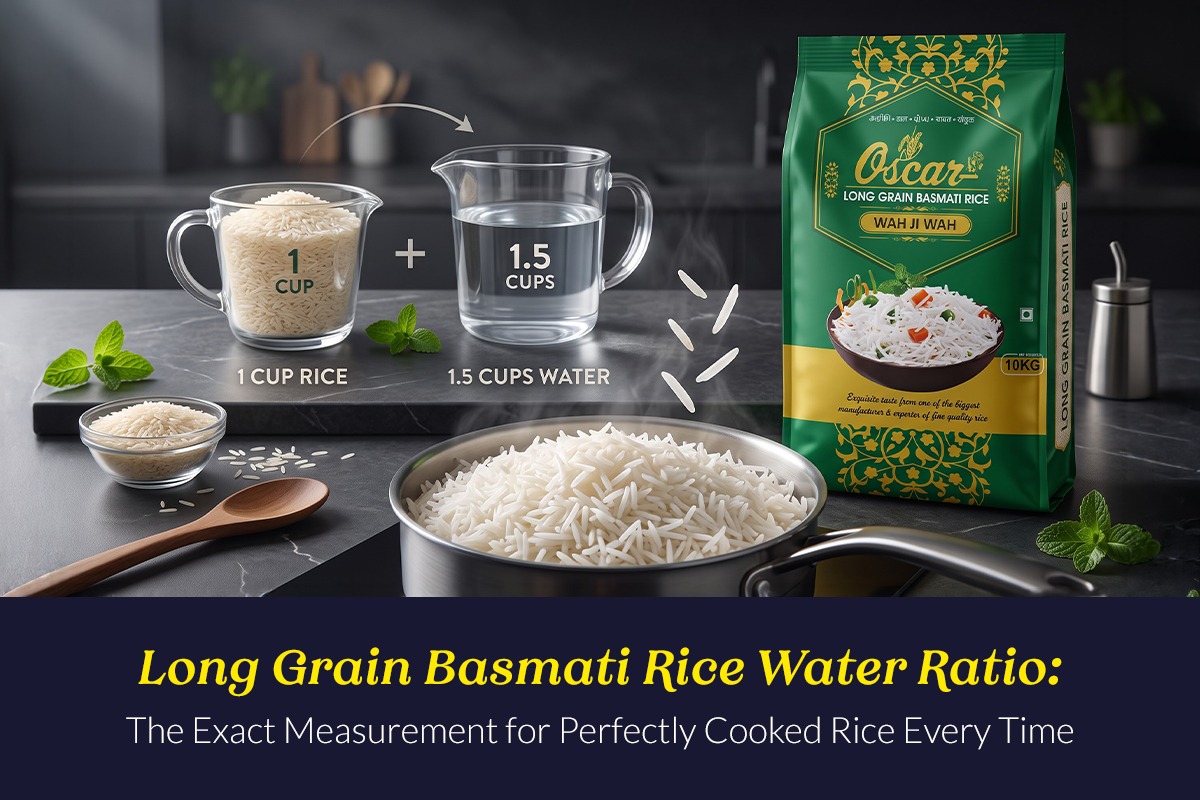
It is no fun serving your meal with sticky mushy rice when the goal is to have light, fluffy rice that does not clump. Knowing the long grain basmati rice...
When it comes to choosing rice grains to decorate your dining table, the options available can be a little daunting, and because of this, we receive inquiries about what sets...
In India, food is not just fuel for the body. It is a way to express love, heritage and celebration. That is why Indian celebrations always include long grain basmati...