Stop Buying “Scented” Rice: How to Identify 100% Natural Aromatic Basmati Rice in 2026?
06 April, 2026
We have all experienced that when we open a bag of rice and are struck by the strong and almost perfume-like smell. Though it smells good, there is one little secret: a lot of brands apply artificial sprays that pretend to smell of high-quality grain.
In Kuber Agro, a parent company of Oscar Basmati Rice, we think you should have the original. This blog will demonstrate how to identify natural aromatic basmati rice in order to avoid paying for the scented imitations and begin enjoying natural flavor.
Why “Natural” Beats “Scented” Every Time?
The aging and origin of the soil is what makes authentic basmati, not a chemical additive. As a matter of fact, a recent industry study proposed that close to 20 percent of low-cost aromatic rice in the global markets could have synthetic aroma boosters.
A compound known as 2-Acetyl-1-pyrroline is the one that provides the true aroma, and it is developed naturally in the grain. You are not only getting a smell when you buy natural but also getting the healthiness of the food and the long, fluffy feel that will make a meal of the world.
There are 3 steps to determining real Basmati rice
1. Check the Shape and Grain Length
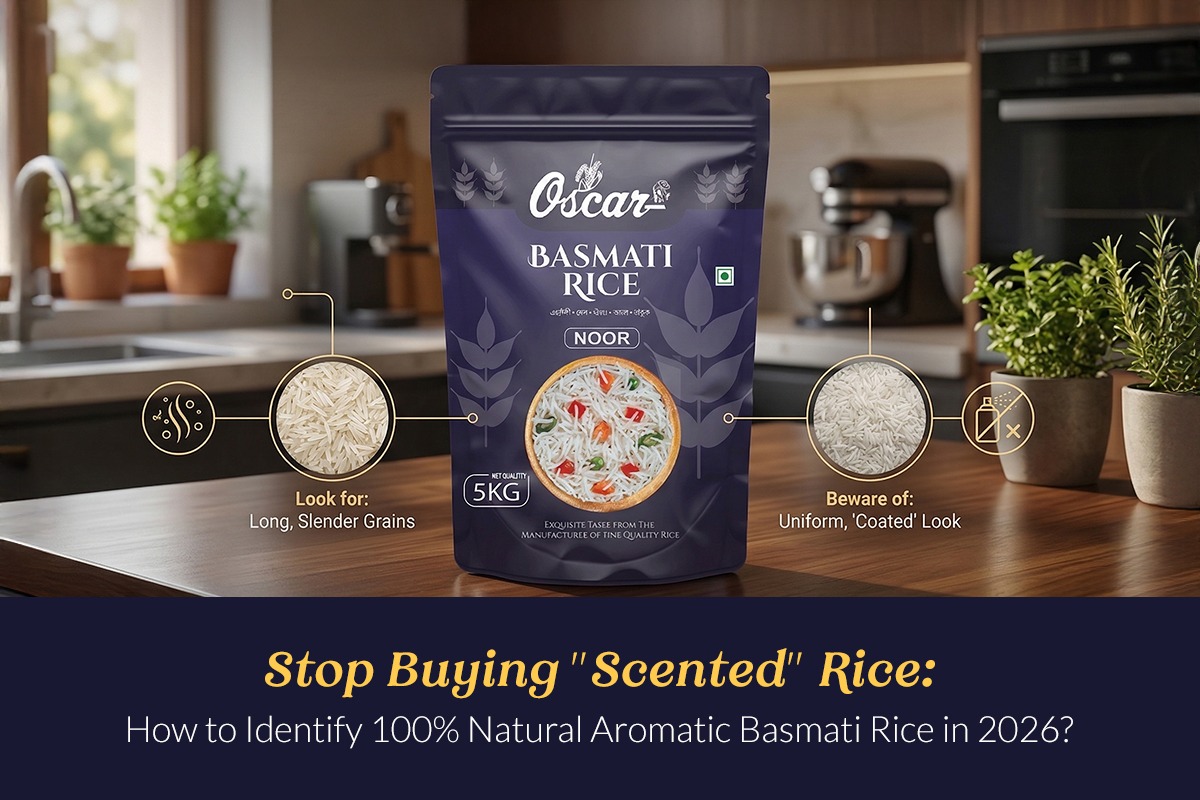
Natural aromatic basmati rice are long and thin and have a tapered end. When the grains appear to be too stubby or rough, they are probably not the type of grains that are the high-quality ones needed to create that natural smell.
2. The Raw Sniff Test
Take a handful of uncooked grains before cooking. The fragrance of natural basmati is subtle, earthy, and nutty. In case the smell is too strong or smells like perfume that is flowery even before it reaches the water, then it has been artificially made.
3. Seek the Aging Mark
Good rice is like fine wine; it must wait. Natural Aromatic Basmati Rice has a minimum of 12 months to 24 months of age. This would naturally concentrate the aroma and make the grains not stick together.
Your Rapid Authenticity Checklist.
Origin: Does it grow in the Himalayan foothills?
Color: Do the grains appear a little creamy (not bled white)?
Texture: Does it remain firm and separate on cooking?
Label: Does it say old rice?
Natural vs. Artificial: In a Nutshell
Feature
100% Natural Basmati
Artificial “Scented” Rice
Aroma Source
Natural Aging & Genetics
Synthetic Sprays
Best For
Biryanis & Gourmet Meals
Daily Budget Cooking
Risk
Higher Price Point
Loss of flavor after washing
For best results, always soak your premium Basmati rice in water for at least 30 minutes prior to cooking to maximize the scent of the rice. This technique will “wake up” the essential oils in the rice.
Find Out More About Kuber Agro
Sustainable Farming Practices
Shop the Oscar Basmati Rice Collection.
The Complete Guide to Cooking Biryani
Conclusion
Don’t be fooled by clever marketing. Luxury comes from a nutty aroma from the rice that has been grown and matured properly. Selecting our Noor Basmati Rice is selecting the legacy of Kuber Agro and guarantees that it has a 100% natural aroma.
Are you ready to try the difference? Switch to real grains today!
Author Name
Lorem Ipsum is simply dummy text of the printing and typesetting industry. Lorem Ipsum has been the industry's standard dummy text ever since the 1500s, when an unknown printer took a galley of type and scrambled it to make a type specimen book. It has survived not only five centuries
No. The natural aroma is deep inside the rice. However, by washing, you are removing the manufactured aroma from the rice. Thus, if you wash the rice and it loses all of its aroma, the rice was likely manufactured.
Aged basmati rice has lower moisture content than non-aged rice, which results in less mushiness when cooked and increases the natural aroma of the rice.
In the case of diabetes management, many people wonder whether their staple, everyday Indian cuisine must be completely avoided, and doing so comes as a big challenge. Several people keep...
It is no fun serving your meal with sticky mushy rice when the goal is to have light, fluffy rice that does not clump. Knowing the long grain basmati rice...
When it comes to choosing rice grains to decorate your dining table, the options available can be a little daunting, and because of this, we receive inquiries about what sets...
In India, food is not just fuel for the body. It is a way to express love, heritage and celebration. That is why Indian celebrations always include long grain basmati...
Once in our lives, we have all gone through the time when we have dedicated all our hearts and hours making biryani at home, thinking it would taste like restaurant...