The Purity Test: Is Your Gluten Free Basmati Rice Authentic or Adulterated in 2026?
03 July, 2026
Everybody enjoys the fragrance of the freshly cooked basmati rice in the kitchen. However, when you have celiac disease or gluten sensitivity, that delicious bowl of rice must be safe as well as tasty! Many consumers are not aware that during milling, cross-contamination can cause the presence of hidden gluten in the regular rice products.
In this blog, you will discover how to identify counterfeit grains and how to make sure that your gluten free basmati rice is 100% pure, safe, and authentic.
The Reality of Rice Purity in 2026
Though rice is gluten-free, its production and transportation from the farm to your plate are a long and complicated process. Cross contamination of standard rice is very common in industrial processing lines when various grains are processed.
The information on food safety reveals that food fraud occurs in about 10% of some premium foods available in the market, and high-value grains such as basmati are a leading target for grain mixing.
We at Kuber Agro, the parent company of Oscar Basmati Rice, believe in absolute purity. Our premium basmati rice is subjected to strict batch testing to ensure that there are no outside allergens that taint the grain.
How to know If your Rice is Gluten Free Basmati Rice or not?
1. Gluten-free certification Mark.
A certified gluten-free seal on your basmati rice’s packaging certifies that the gluten level of the basmati rice has been tested and found to be no more than 20 parts per million (ppm). Verify whether the product is from a reliable gluten-free certification organization.
2. Check the quality of the grain
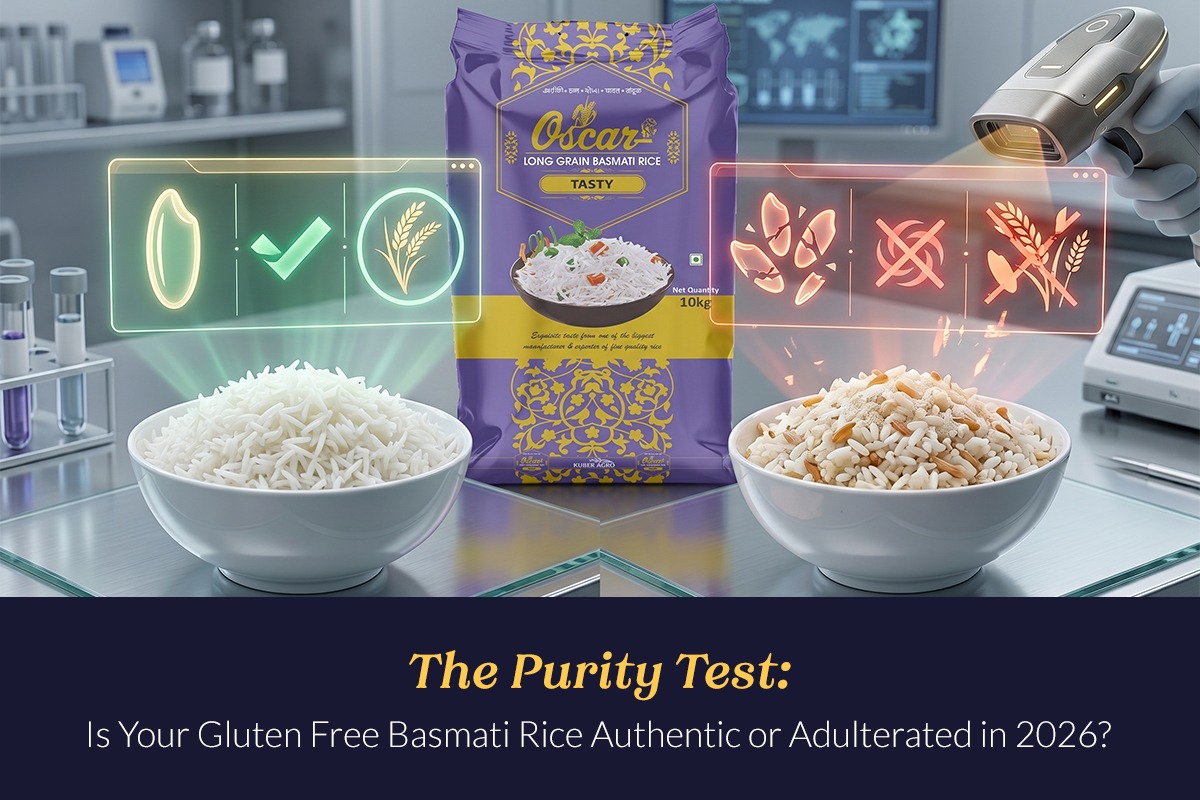
The authentic gluten free Basmati rice is very long and thin and has distinct tapered ends. Cost-cutting adulteration is common with the addition of short, stubby white rice to the packs.
3. Observe the Elongation After Cooking
In the case of true premium Basmati rice, it does not stick together and doubles in length upon cooking. If the rice is combined into a mushy, sticky mass, there is a high possibility that the rice is made of high-starch filler grains.
The Ultimate Rice Purity Checklist & Comparison!
Look for premium quality basmati rice grains that do not contain any additives on the list of ingredients;
Look for uniform length and shape (grains will have a tapered shape), as well as a creamy white appearance of the grains.
Grains have a uniform length, narrow shape, and creamy-white appearance.
It can be traced to trusted millers such as Kuber Agro.
Choosing Safe Rice Options
Rice Choice
Best For
Gluten Contamination Risk
Certified Gluten-Free Basmati
Celiac disease & severe gluten sensitivities
Extremely Low (<20ppm)
Loose/Bulk Bin Basmati
Budget-conscious shoppers
High (Due to shared scoops/bins)
Standard Pre-packed Rice
General everyday cooking
Moderate (Potential shared factory lines)
Don’t base the basmati rice’s quality on its appearance alone. When boiled, pure, aged basmati rice gives off a natural popcorn or nut-like fragrance. If it has no odor whatsoever or a cardboard smell, then it is an indicator of a poor substitute.
Learn More About Our Process
Learn how we keep our processing lines sterile and allergen-free; read our Kuber Agro Quality Promise. Alternatively, you can visit our Oscar Basmati Rice product page to find our best-quality, certified rice products.
Conclusion
Clear food sourcing is essential for your health. Checking for the certifications and purchasing from reputable producers like when you buy gluten free basmati rice from Kuber Agro, it helps you to keep your kitchen allergen-free.
Looking forward to experiencing the difference that absolute purity brings? Check now our latest Oscar Basmati Rice product range.
Author Name
Lorem Ipsum is simply dummy text of the printing and typesetting industry. Lorem Ipsum has been the industry's standard dummy text ever since the 1500s, when an unknown printer took a galley of type and scrambled it to make a type specimen book. It has survived not only five centuries
Yes, raw rice is gluten-free. Contamination can occur during harvest, milling, or packaging if the rice is processed in the same facility as wheat, barley, or rye.
Oscar Basmati Rice is a proud brand of Kuber Agro and has dedicated, state-of-the-art milling machines, which ensure that there will be no cross-contamination, making each pack gluten-free.
Once in our lives, we have all gone through the time when we have dedicated all our hearts and hours making biryani at home, thinking it would taste like restaurant...
With the number of different packages to choose from in a grocery store, it can be rather difficult to ensure that you always choose the Oscar Daily basmati rice, especially...
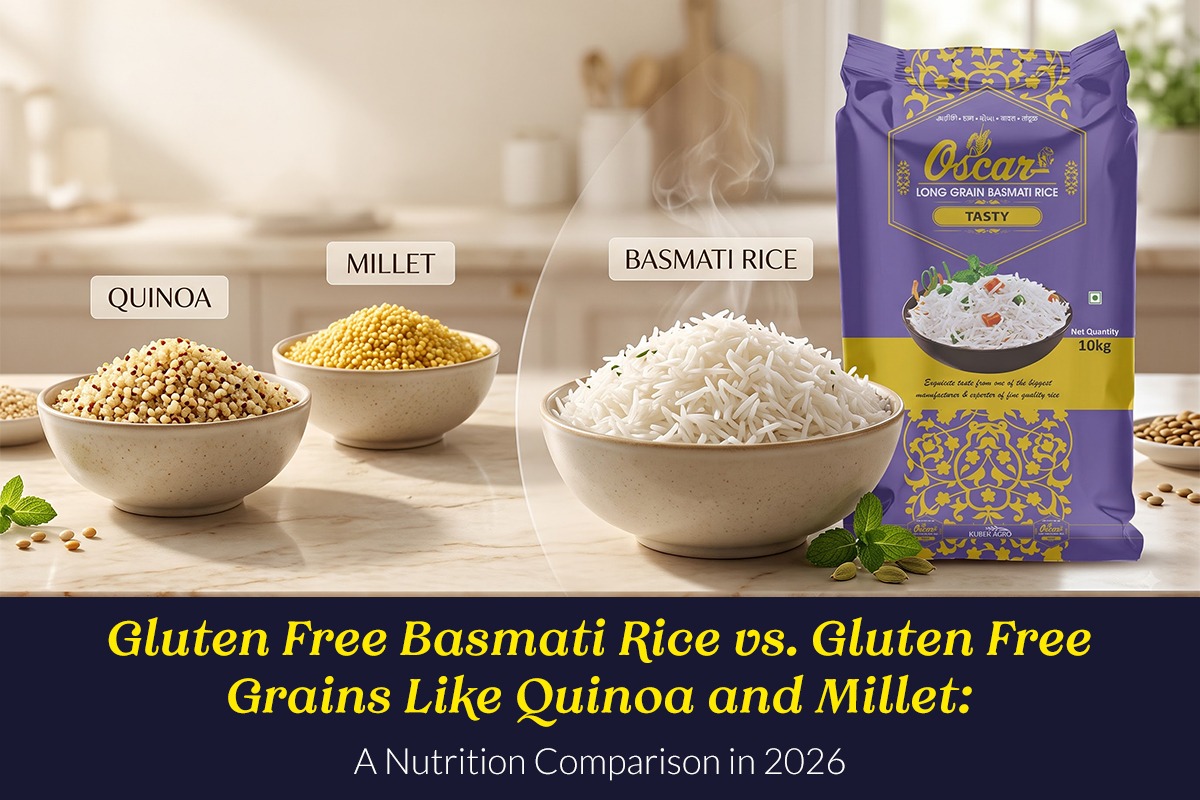
When we decide to go for gluten-free foods, we find ourselves questioning, “Which grain is the right one for our daily use?” Traditional Gluten free basmati rice could be one...
Cooking royal Basmati rice can be quite annoying when one gets sticky rice. Cooking long-grain rice is difficult if you are not aware of soaking times, the ratio of water...
Every one of us loves the fragrance of a fresh preparation of biryani, but what if some of the rice dishes come out fluffy and others end up clumpy and...