What is Premium Basmati Rice of India? Origin, Aging Process, and What Sets It Apart?
28 July, 2026
Ever made biryani, only to get mushy and sticky grains? We’ve all been there. The right grain makes all the difference; that is the reason we have premium basmati rice.
Today, we’re stripping away the layers to discover its rich origin, traditional aging process, and what really makes it stand out on the dinner tables.
Origin and Cultural Heritage
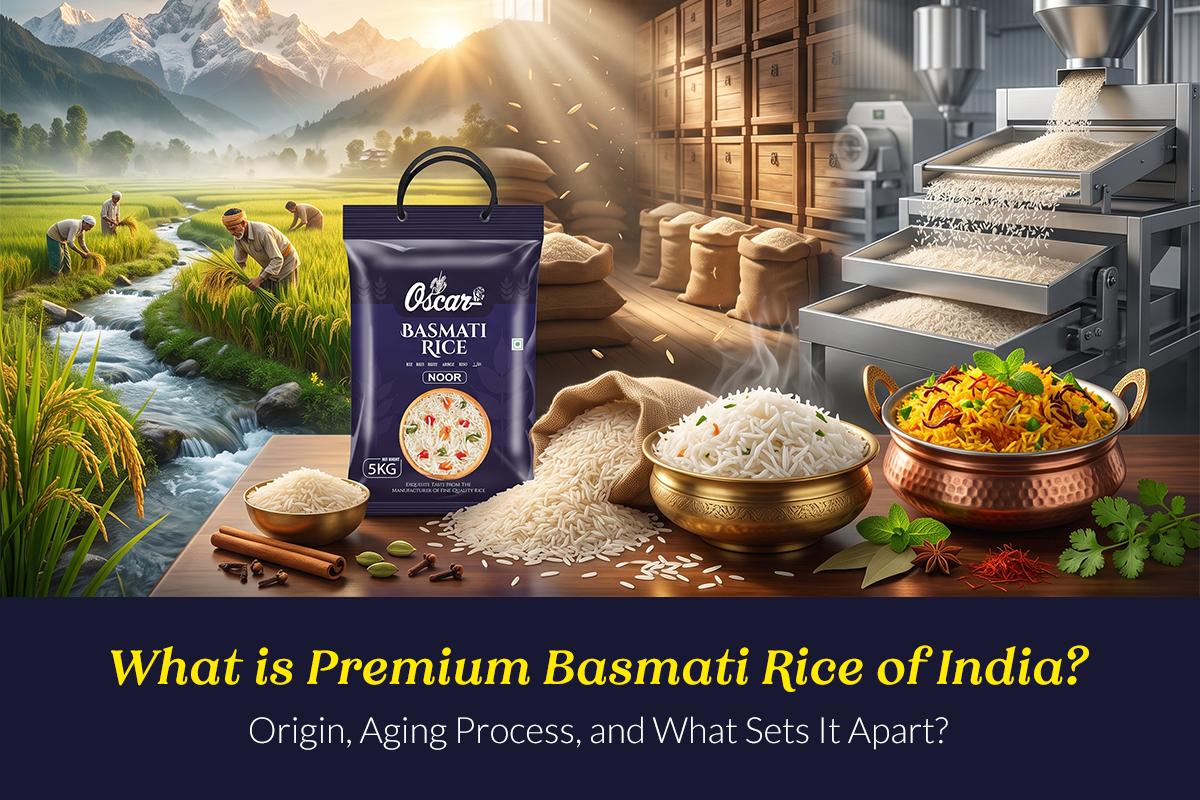
Premium quality basmati rice is not just a mere grain; it is an authentic culinary tradition. The crop is unique and can be grown only in a particular soil and climate type; it comes from the snow-fed foothills of the Himalayan range in the fertile region. More than 65% of the world’s basmati is grown here, with the distinctively nutty smell and long, narrow grains thought to be caused by the mineral-rich runoff from the soil.
At Kuber Agro, we meticulously select the rice that is grown from these traditional belts and thus maintain absolute purity of the rice at Kuber Agro, the proud parent company behind Oscar Basmati Rice.
The process by which premium basmati rice is transformed
Step 1: Cultivation and harvesting
The crops are cultivated through mineral-rich water flowing from the hills of the Himalayas, which is nurtured by the farmers. The crops, then, are carefully harvested when mature, ensuring that each long grain is preserved.
Step 2: The Natural Aging Process
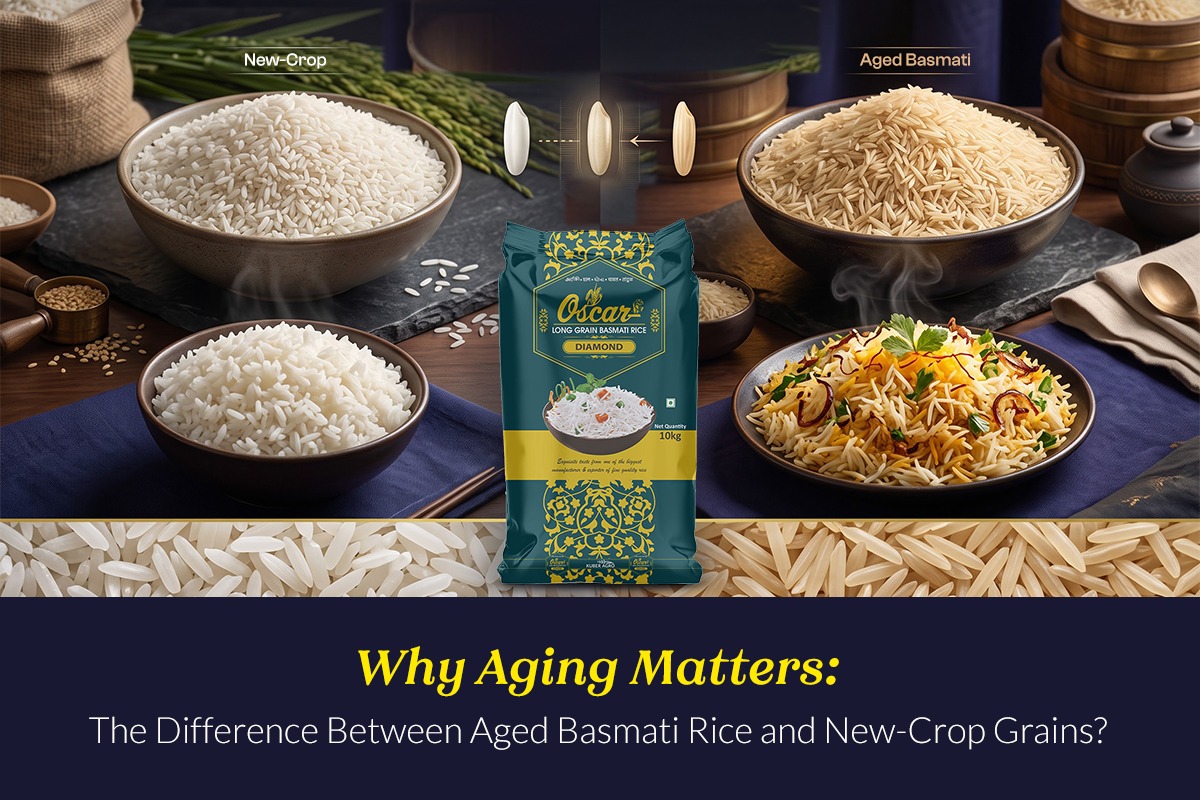
Premium quality basmati rice is aged for a minimum of 12-24 months before being sold to the consumers, whereas standard rice is sold directly on the store shelves. As the grains get older, they lose moisture and become hard on the outside, allowing grains that are up to 2 times larger than they were when raw to be cooked without splitting.
Step 3: Accurate milling and sorting
Here in Kuber Agro, we use modern technology and tools to finely and precisely hand-shell and polish our premium basmati rice grains. It removes impurities while keeping its oil and flavor.
Quality Identification
Long Grain: Has long length, expanding during the cooking but staying intact.
Non-Sticky Separation: Grains won’t turn sticky and smuggled.
Natural Aroma: Any natural scent is untouched and no artificial flavor is installed.
Aged Perfection: Naturally aged to provide more flavor.
Comparing Your Rice Options
Option
Best For
Risk
Premium Basmati Rice
Biryanis, festive meals, daily feasts
Slightly higher upfront cost
Regular Long Grain
Quick side dishes, daily fried rice
Sticky texture, lacks aroma
Short Grain Rice
Puddings, risottos, sushi
High starch, turns mushy easily
Expert Tip: Don’t cook premium basmati rice on high heat initially. To get the maximum length and fluffy texture from the grains, plunge them in cold water for 30 minutes before cooking.
Basmati rice is a real treat for all dishes! Experience the original taste of the Himalayan legacy of Oscar Basmati from Kuber Agro. Explore the taste of premium basmati rice of India and know the difference yourself.
Author Name
Lorem Ipsum is simply dummy text of the printing and typesetting industry. Lorem Ipsum has been the industry's standard dummy text ever since the 1500s, when an unknown printer took a galley of type and scrambled it to make a type specimen book. It has survived not only five centuries
Premium Quality basmati rice is given a special aging process of up to 2 years. This results in grains that are longer, not sticky, and have a much deeper “natural” aroma.
Once in our lives, we have all gone through the time when we have dedicated all our hearts and hours making biryani at home, thinking it would taste like restaurant...
With the number of different packages to choose from in a grocery store, it can be rather difficult to ensure that you always choose the Oscar Daily basmati rice, especially...
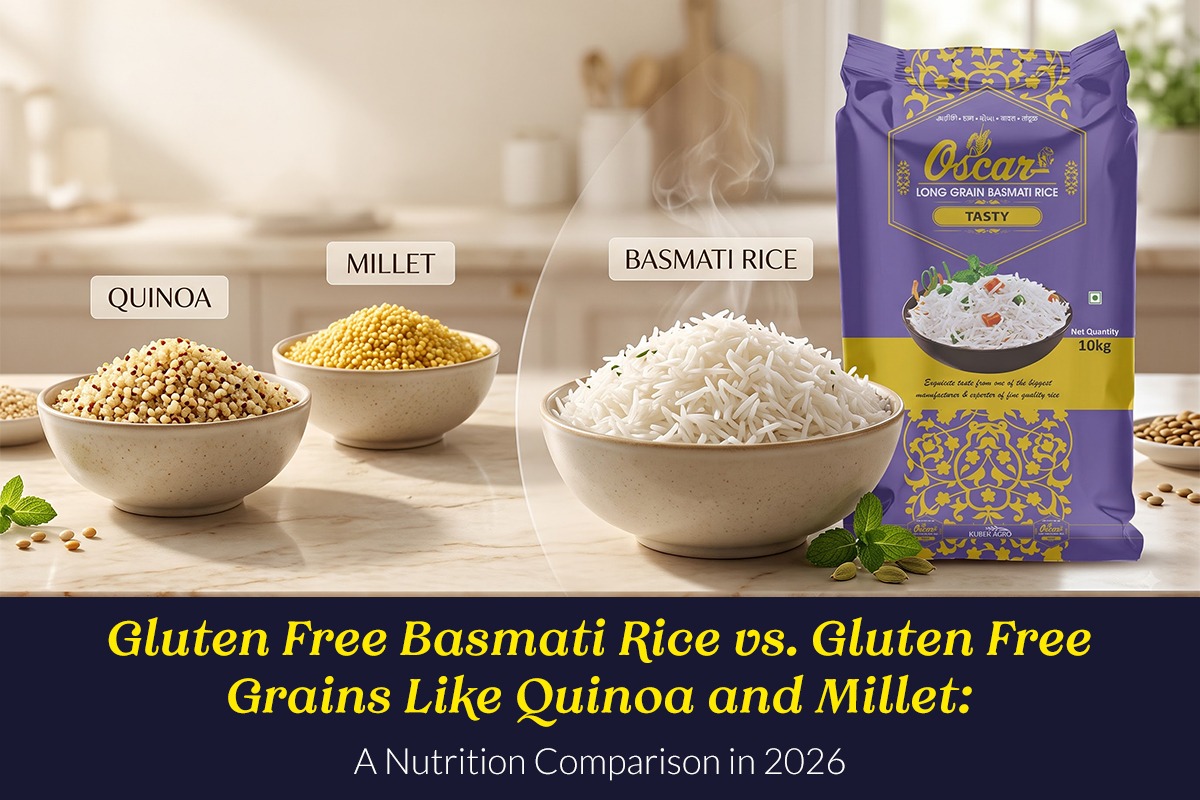
When we decide to go for gluten-free foods, we find ourselves questioning, “Which grain is the right one for our daily use?” Traditional Gluten free basmati rice could be one...
Cooking royal Basmati rice can be quite annoying when one gets sticky rice. Cooking long-grain rice is difficult if you are not aware of soaking times, the ratio of water...
Every one of us loves the fragrance of a fresh preparation of biryani, but what if some of the rice dishes come out fluffy and others end up clumpy and...