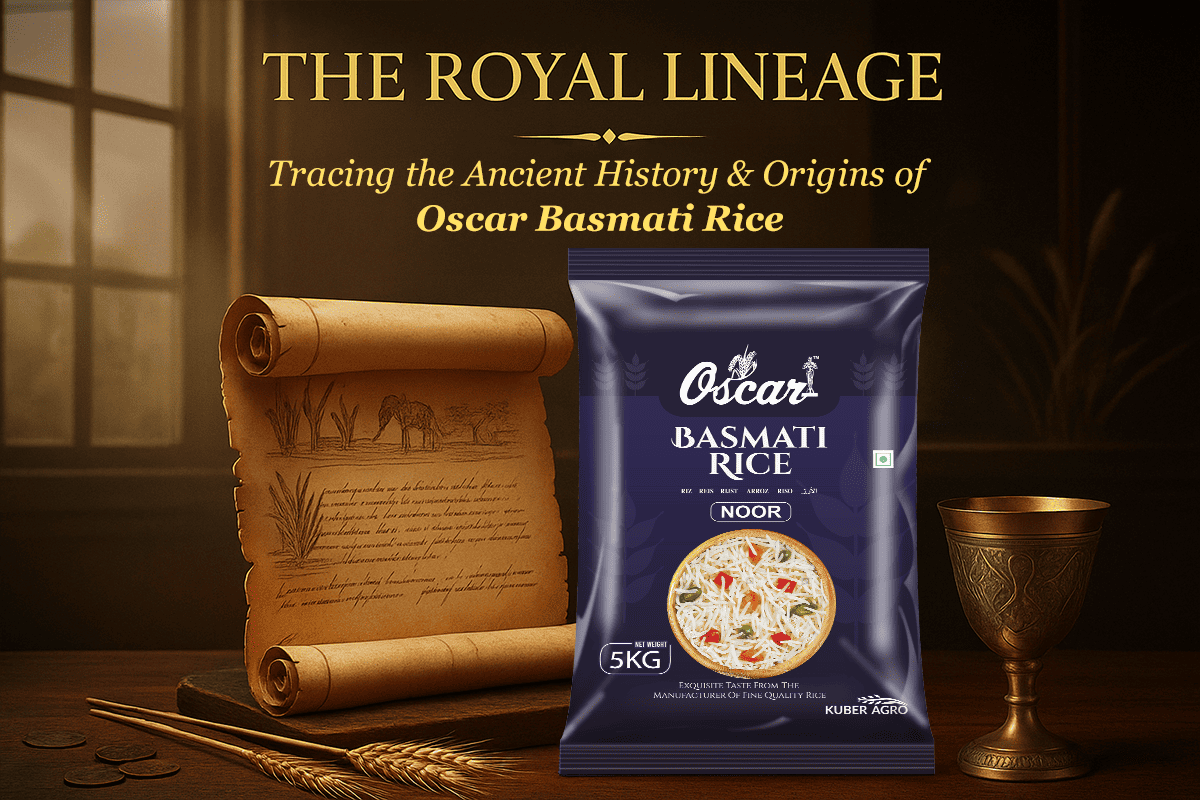
The Royal Lineage: Tracing the Ancient History & Origins of Oscar Basmati Rice
Have you ever opened a bag of Basmati rice and instantly taken a deep breath of that heavenly buttery aroma? It is no longer an aroma; it is a thread of history, of rich earth, and of culinary culture forged for centuries.
Now, we have dug deep into the stories surrounding familiar ingredients, and believe me—this is an incredible story—the liberating journey of Oscar Basmati Rice by Kuber Agro from the Himalayan foothills to your dining table. It is not just a grain; it is a valuable heritage that we are proud to deliver to you.
If you’ve ever thought, “Where does ‘the King of Rice’ really come from, and how does a premium brand like Oscar by Kuber Agro honor that history?” Then you are in the right place. Prepare to unroll the scroll of what may be one of the most important grains!
Basmati: The Queen of Fragrance
The name “Basmati” itself gives the first clue to its uniqueness. The name is derived from Sanskrit: the word “bas” (meaning aroma) and “mati” (meaning full of) translate beautifully to “Queen of Fragrance.” This is a fitting title for a rice variety grown in the Indian subcontinent for centuries, and some estimates suggest, more than 2000 years!
However, the first formal reference is often traced back to the 18th-century Punjabi epic, Heer Ranjha, by Waris Shah in 1766. This suggests that by the mid-1700s, Basmati rice was already a staple crop, which was highly valued and sought after by the Mughal emperors and nobles for their extravagant banquets.
The Land of Origin: Himalayan Footprints
The true center of origin and unique traits of traditional Basmati rice are closely linked to the specific geography of the Indo-Gangetic plains, especially where they are fed by the snowmelt river system of the Himalayas.
- Geographical Indication (GI): This is a legal definition that dictates the rice must be produced in specific geopolitical environments in order for it to be recognized as Basmati.
- Why? Because the unique interaction of the soils, climate, and pure water sourced from the mountains produces a unique texture, elongation during cooking, and, of utmost importance, the signature light and delicate aroma of the grain (2-acetyl-1-pyrroline chemistry).
- The Fertile Cradle: The actual locations of production, key areas within the Indian states of Punjab, Haryana, and Uttarakhand (specifically the Dehradun area, which some experts will even refer to as the “mother” of all basmati), are where this magic occurs.The unique agro-climatic conditions, even within these states, cannot be replicated anywhere else.
It is indeed this deep-rooted connection to the land that contributes to the authenticity of Basmati rice, and that is why Oscar Basmati Rice by Kuber Agro remains committed to sourcing from certified regions.
The Evolution of the Variety: From Ancient Landrace to Modern Star
For many centuries, farmers and scientists worked to “improve” the Basmati grain. And here’s where things get interesting: you have two main types.
- Traditional Basmati Varieties: These are the original, tall, low-yielding, but highly fragrant landraces such as Basmati 370 and Dehraduni Basmati. In many ways, they are the ones that made the legend. They also take a long time to grow and tend to yield less, making them a high-quality, heritage, premium product.
- Evolved/Improved Basmati Varieties: With the world demand for Basmati skyrocketing in the 20th century, agricultural research institutes in the region released improved hybrid varieties of Basmati to provide farmers with varieties that had more yield and were more resilient to the environment and disease. This is where many will know the Pusa Basmati 1121, the highly celebrated hybrid, has transformed the market for consumers.
Pleasingly retaining a signature aroma and elongating magnificently to often more than double its original length, it created excitement with consumers and appeared to define a new standard in production and quality to meet demand.
While the advent of these modern hybrids has created new experiences with rice, allowing consumers across the globe to engage with this quality brand, there will always be brands that value authenticity and genuineness. These brands will be drawn back to original varieties and methods, and that’s a huge part of the Oscar Basmati Rice narrative.
Oscar’s Commitment: Sourcing That Remains True.
For us at Oscar, the history of Basmati rice isn’t just trivia—it is the basis of our entire business. We literally source in a manor that pays homage to that ancient tradition.
We’re not just buying rice; we narrow down the heritage of each rice grain. We aim to connect you, the consumer, to generations of farmers who have been perfecting this grain for centuries.
- Count on Core Terroir: We source from the original growing regions because we firmly believe that soil, water, and microclimate are absolutely necessary in order to obtain the authentic flavor and aroma of a true premium Basmati.
- The Purity Promise: We have chosen to work exclusively with farmers who utilize traditional, as well as often sustainable, growing practices, which of course protects the genetic purity of the rice. We don’t just seek the longest grain; we take and are conscious of the rice passing from generation to generation, where there was a prioritization of quality. This commitment to purity is vital to the rich flavor and light, non-sticky texture that defines Oscar Basmati Rice.
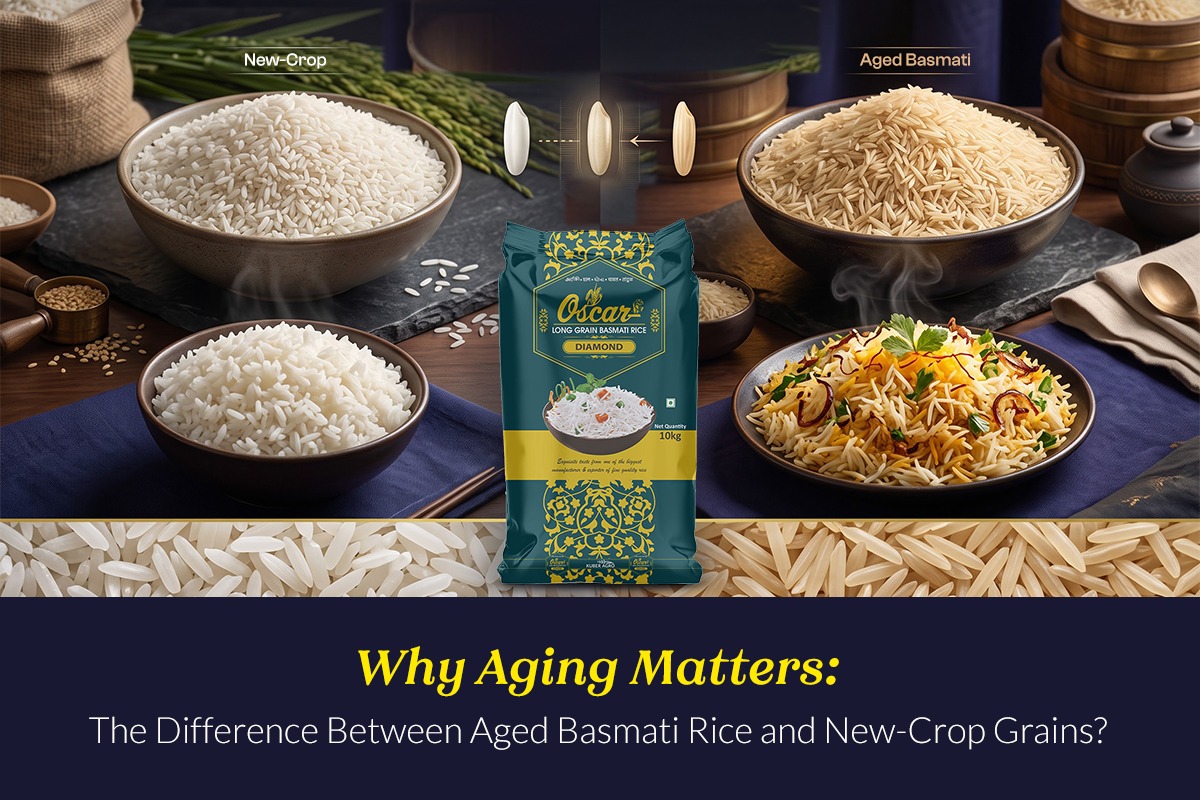
- Aging: Another critical step that is rooted in tradition and essential to the process is aging. Basmati rice, after it’s harvested, must age for at least 12-24 months. Aging is a natural drying process that removes moisture and creates richness in flavor and aroma compounds. It is an investment of time that shortcuts in buttons cannot replace. Aging is a fundamental feature of the Oscar promise.
Featuring History on Your Plate.
It’s time to appreciate that the next time you prepare the delicious, fluffy, aromatic, perfect pot of Oscar Basmati Rice by Kuber Agro, you are not simply serving a side dish. Values stem from traditions that predate most modern countries. This is a history you will find written in the thick soil of the Himalayan plains.
Great food begins with “great stories” and deep-rooted respect for the food’s origins. This is why we have made a choice to preserve the integrity of the “Queen of Fragrance.” Preserving this integrity and quality guarantees the meals you create will be tasty and consequently unforgettable.